Signal Stacking: Why One Trigger Is Never Enough in 2026 Outbound
One signal is a bored competitor, an analyst, or an intern doing research. Two signals cut the noise; three cut it again. Why signal stacking beats single-trigger outbound in 2026.
Every outbound vendor now has a "signals" tab. Hiring change, funding round, tech swap, job change, pricing-page visit - pick your poison. The problem is that one signal, on its own, rarely works: a Series B announced this morning puts you in a room with fifty other founders hitting send on the same "Congrats on the raise" email before lunch.
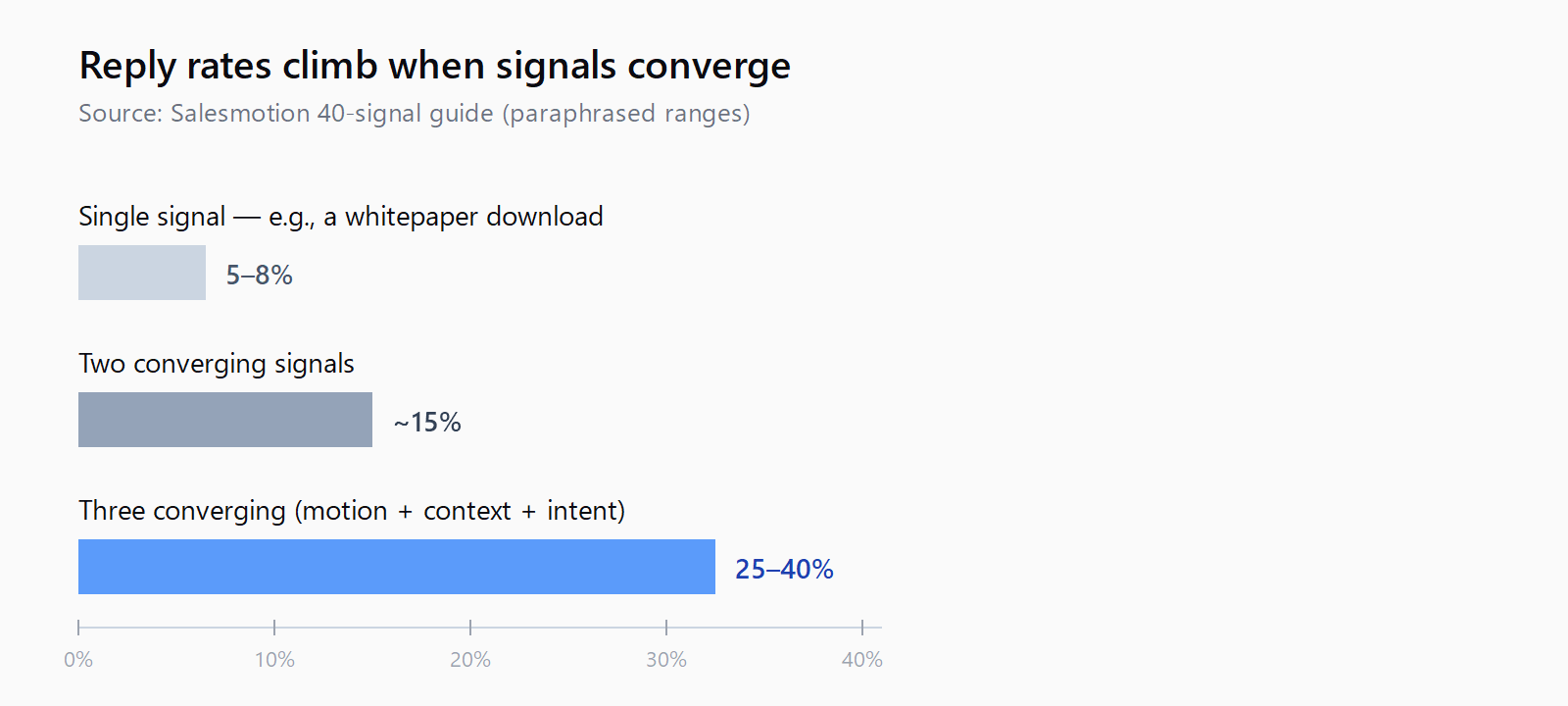
The move I keep seeing from teams that actually book meetings is signal stacking - wait for two or three independent signals to converge on the same account before touching it. Semir Jahic at Salesmotion laid it out concretely in his 40-signal guide:
A prospect downloading a single whitepaper represents weak signal strength with typical reply rates around 5-8%. However, when that same account demonstrates multiple converging indicators - a new VP of Sales hired three weeks prior, an open Revenue Operations Manager position, and CEO commentary about "sales transformation" during earnings - the reply rate climbs to 25-40%.
That 5x gap is the whole argument. Austin Hughes at Unify reaches the same conclusion from a different direction - master one play before stacking. (I believe) both are right, and the order matters: get one working, then stack.
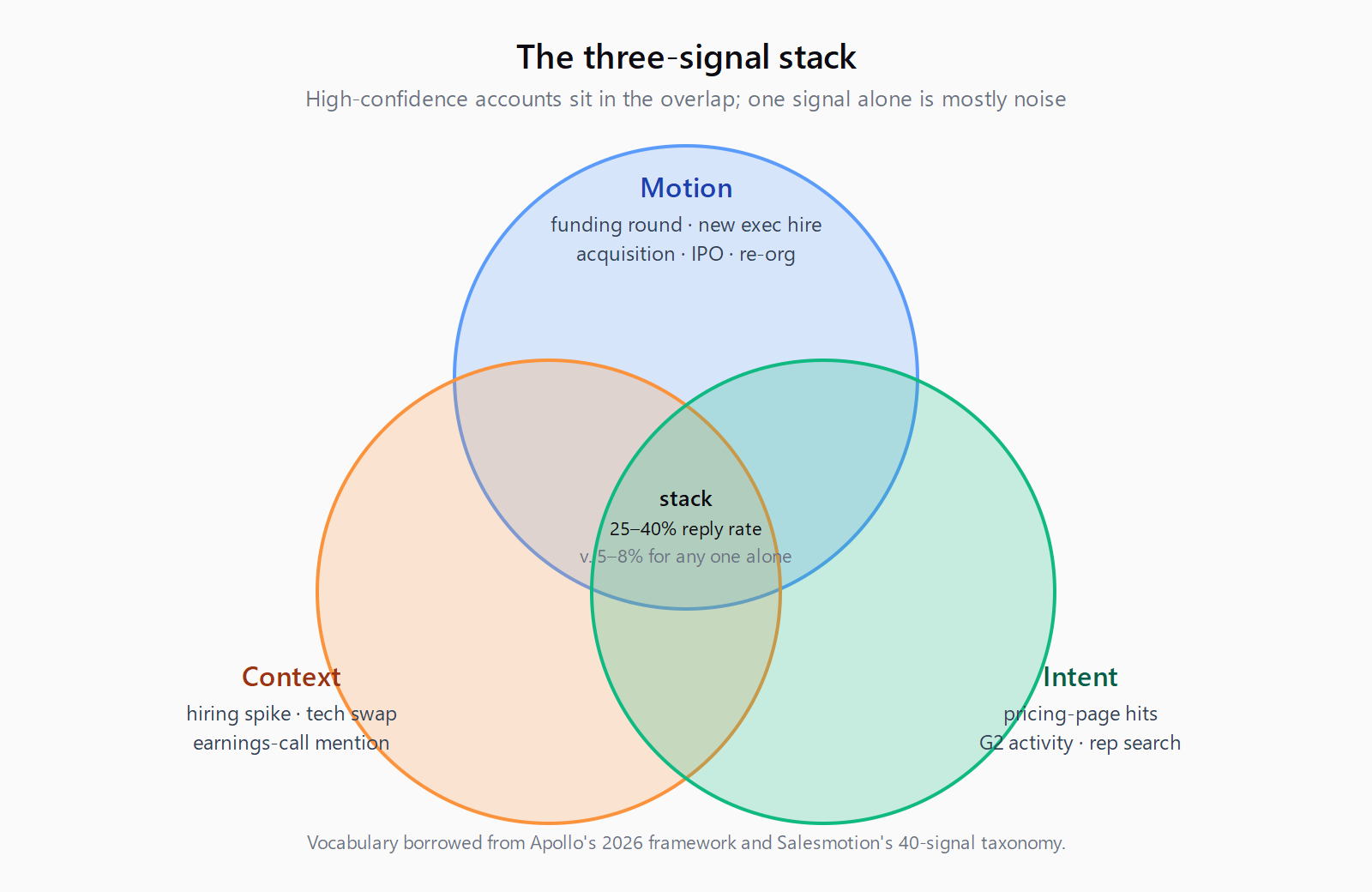
The stacks that convert aren't random pairs. Jahic calls out five high-confidence combinations, and the shape is always the same: one motion signal (new hire, funding, raise) plus one context signal (hiring spike, tech swap, earnings-call mention) plus one intent signal (pricing visit, G2 activity). Funding alone is a motion signal; funding plus five SDR job postings plus repeated pricing-page hits is a revenue-engine-rebuild (!). "New CRO hire + sales-team hiring spike + vendor-dissatisfaction signals" is another one of Jahic's five, and it maps to exactly the kind of account where the first seller through the door has an unfair advantage. The teams that get there within the 30-minute speed-to-signal SLA Apollo's 2026 framework now treats as baseline are the ones booking meetings.
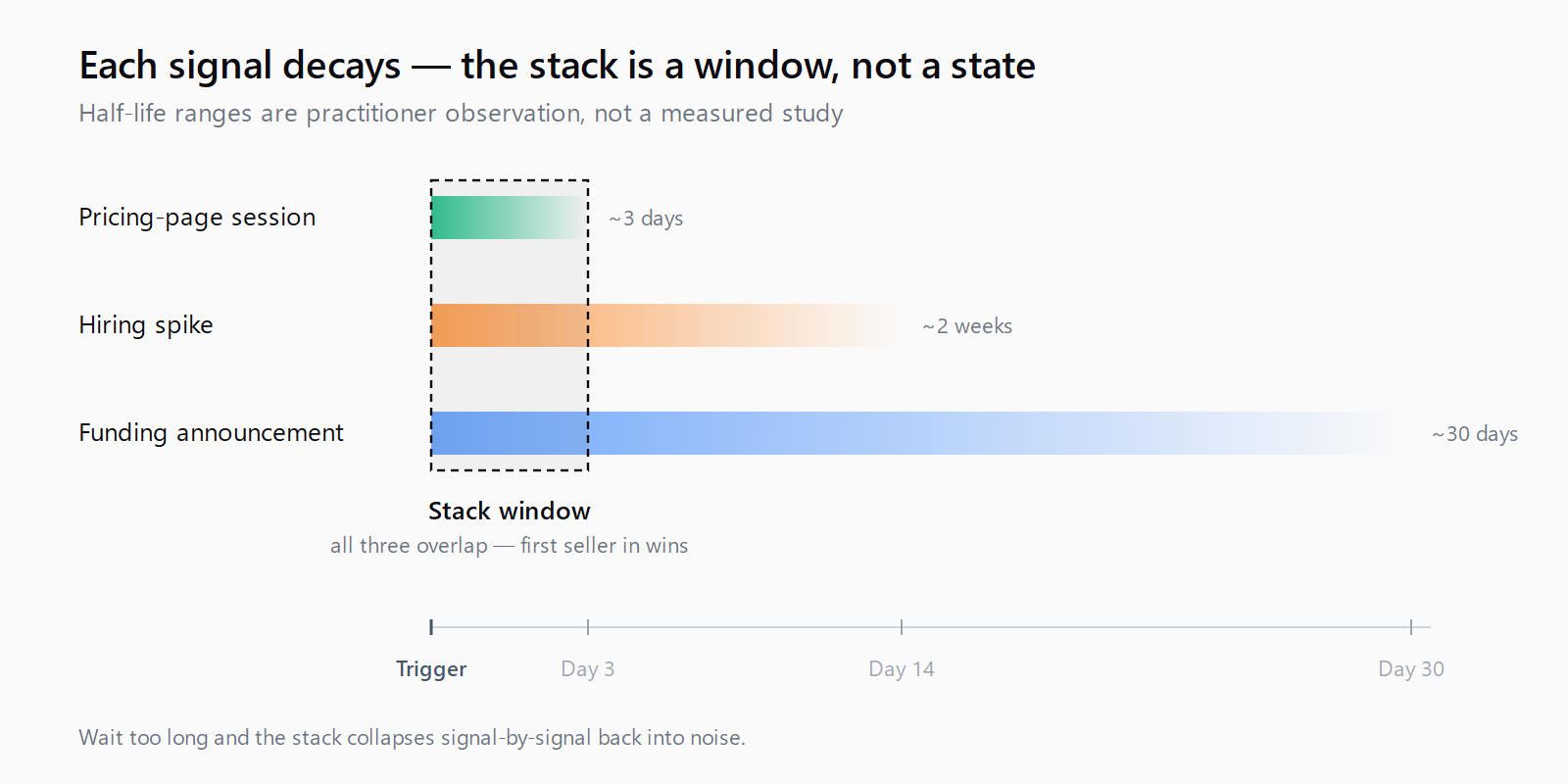
The timing point is worth its own beat. A stacked signal doesn't stay stacked - a hiring spike is a hiring spike for about two weeks, funding news runs cold in a month, pricing-page sessions decay in days. The stack is a window, not a state. Teams that build the detection layer without the response layer end up with a log of accounts they could have reached last Tuesday.
The reason one signal fails is false positives. A single pricing-page visit is a bored competitor, an analyst, a candidate doing research, a well-meaning intern. Two signals from two sources cut the noise; three cut it again. Apollo calls this multi-signal validation and makes it a gate before any automated sequence fires. The Landbase numbers for single-source intent programs (only 25% of B2B companies use intent data, despite 96% of marketers reporting success with it) read less like an adoption curve and more like a quality problem - the other 75% saw one signal fire, got a bad meeting, and stopped paying.
This is the seam Leadex lives at. Signal stacking doesn't fail at the detection layer - there are ten vendors who'll sell you funding alerts - it fails at the "now go research the account and enrich the contacts before the moment closes" step. When a chat brief says "companies that raised Series B this month AND are hiring 3+ SDRs AND have a new CRO," the four-tab workflow (discovery + scraper + enrichment + CRM upload) breaks on the AND. A research agent that composes sources in one run and pushes the deduped list to HubSpot is the part of the stack that's actually scarce.
Name the technique "signal stacking" because names spread and citations stick. A move without a name is a move you only see in hindsight. (See also: audit the underlying contact database first.)