
How to Build a Signal-Based Outbound Workflow from Scratch (No Code)
You don't need 14 tools or a RevOps team. Pick one signal, filter by ICP, act within hours, measure, then stack. A from-scratch playbook for signal-based outbound in 2026.
Every "signal-based outbound" guide I've read lately reads like it was commissioned for a company with a dedicated RevOps team, a data warehouse, and a six-figure tool budget. Austin Hughes at Unify lodges the same complaint before giving you the shorter version, and the shorter version is right:
You don't need a 5-phase operating model or 14 tools stitched together. You need one working play, live today.
Here's what "one working play, live today" actually looks like for a team that starts with a Gmail account, a shared spreadsheet, and nothing else. Pick the signal first - repeat pricing-page visits from accounts you don't already know. Your website analytics already track it; no third-party tool required. Filter the list against your ICP (say, 50-500 headcount, two industries, one geography). Write one short email that references the category the account was researching, not the specific visit (which is creepy). Send it within hours. That's the whole play.
The "within hours" part is where most teams quietly lose. The often-cited MIT Lead Response Management finding that contacting a prospect within 5 minutes makes you 21x more likely to qualify them versus waiting 30 is old enough to vote, and people still act on three-day-old signals. A signal from last week isn't a signal - it's a memory.
Once one play works, add a second signal. Job changes at target accounts come next, because a champion who already knows your product landing somewhere new is a warm entry on a cold account. Funding rounds, which Lead411's 2026 outbound playbook puts in the top three triggers, are third. By the time you're stacking three signals on the same account - hire plus hiring spike plus pricing visit, say - you're in the zone Salesmotion's buying-signals guide reports as a 5-10x response-rate lift over single-signal outreach.
None of this requires code. What it requires is a list you can keep current and a research step you can run on demand when a signal fires. That's the gap a chat-native research agent like Leadex is built to fill - describe the ICP in prose, approve the plan, and the agent composes Crunchbase, LinkedIn, company-site scraping, and enrichment in one run, deduped, pushed to the CRM. The classic workflow was four tabs and a CSV; the research the signal actually demands now fits inside one message and a plan preview. (I'd rather keep one tab and a log than four tabs and a drawer of vendor invoices.)
The thing to avoid - every guide repeats it, but it's worth repeating again - is tracking ten signals before you have one working. Signal fatigue is real: 200 alerts a day from eight sources (!), a sales team that's learned to ignore the alerts tab, and nothing converts. Pick one, run it for two weeks, measure signal-to-reply, and only then stack.
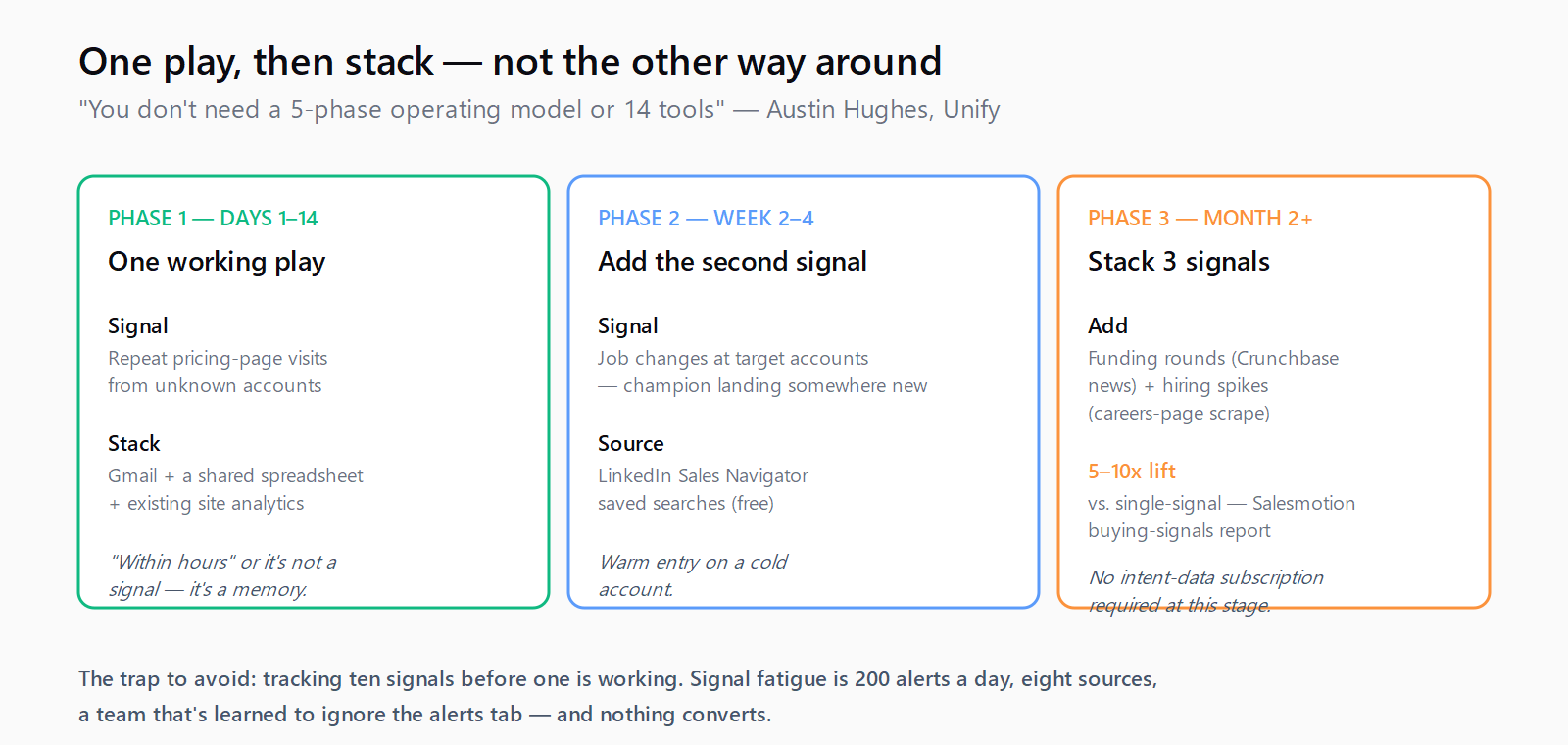
When you're ready for more sources, the three that compound well with pricing-page visits are job-change alerts (free via LinkedIn Sales Navigator saved searches), funding-round monitors (Crunchbase's public news feed), and hiring signals (a weekly scrape of the target's careers page). None of those require an intent-data subscription, and all of them are behind most teams' first signal stack already.